Posts Tagged ‘history’

Egypt – Game Over or New World Order?

Saturday, February 12th, 2011

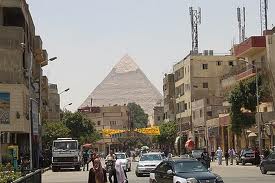
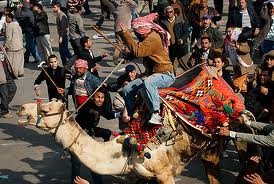
As expected by many (and predicted by Mockoblog two weeks ago), Hosni Mubarak abdicated. Protesters are celebrating what they consider to be a victory over a regime which for too many of them coincides to all they can remember – a lifetime.

Scenes of jubilation in Cairo, Alexandria and other major Egyptian cities and throughout the Arab World have the unrestrained joy and the party-like atmosphere resembling a football victory. But who exactly won exactly what? The protesters definitely believe they won the battle against Mubarak, yet they have no idea what’s going to happen next or, indeed, if they won or the regime chose to dispose of the 82 year old president like a trapped lizard which breaks its own tail in order to survive.
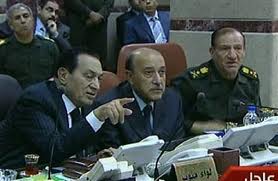
The situation in Egypt is still very volatile and nothing really has improved in terms of filling in the political  gap. There seems to be no clear direction, no solid leadership in the street opposition, no positive unity (after the negative message of ‘down with the regime’), no credible alternative to the military power.

The matrix of the Egyptian society after decades of iron fist government is polarized. Most Western commentators fear the dichotomy between Islam and Coptic Christianity, yet the main divide will be between the poor masses and the collaborators of the Mubarak regime. And this is a very intricate social pattern, scaled down to the very single family. There is no corruption without corrupt people and no torture without victims. It is likely that the class that used to have the power will struggle to hold onto it while the pro-democratic protesters will have to protest again. As long as the military holds the power, there will be some balance in the status quo but this is unlikely to last. As the opposition will get better organized, so will the  Mubarak’s ‘old boys’ – it will be just much easier for them, as they still hold the connections, the resources and the knowledge.
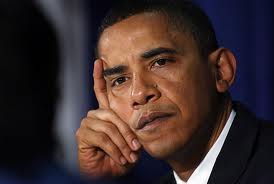
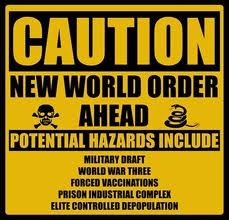
After a series of slight mistakes and embarrassing miscalculations, the White House finally got it right when Mr. Obama said that this was ‘not the end of Egypt’s transition’ but ‘the beginning.’ The beginning of what? This is neither a walk in the park for Egypt’s impoverished majority,  nor the cup of tea for other authoritarian Arab regimes, nor much good news for Israel and its allies. A single spark could ignite the Middle East and the situation in Egypt, be it just economic, not even social, political and religious, is a bonfire.  Civil War is still in the cards and it may even be of a kind yet unknown to humanity, a pan-national Arab civil war which, if not managed in the region, could easily turn into World War III, perhaps the precursor of the New World Order.
Bed Time Story (Continued from 10/05/2010)

Monday, February 7th, 2011

Night 3

What are we writing about? Are we writing the wishing thing? Please don’t write down everything I say. OK.

On planet Go-to-Bed people don’t throw coins into the wishing well, they throw cows, but of course there are no cows on that planet, so they have to wait for space ships from Earth to bring a cow or two every now and then. This is why Faruno Abalgandon Vextraliensis wanted to become a captain, so he could travel to other planets and get more cows. He was hoping that more and more people on planet Go-to-Bed will be able to make wishes, although it didn’t really matter for Faruno if those wishes came true. He didn’t even care whether he was going to bring back home cows or elephants. Of course it is much harder to throw an elephant into a wishing well that was made mostly for cows. However, elephants like water so they could live happily on planet Go-to-Bed, if not piled up too many on the same well.

Prior to becoming a captain, Faruno had to go to university, then school and, finally, to kindergarten. Only the best students ever went to maternity, to be born again. The best captains were chosen among those because when you get re-born, you may not look like other people on your planet, but you may even look like a human, with only two legs, a single nose and maybe a funny hat.

Now mum wants us to go to bed so we may not become space ship captains tonight.

Egypt Crisis – Street Violence and International Confusion – Where to?

Thursday, February 3rd, 2011

Ten days into the protest movements, there are more questions than answers around the Tahrir Square in Cairo and indeed in the whole Arab World.

The Egyptian popular uprising has the characteristics of a revolution, and a bloody one, too. Sides are starting to appear clearer out of the smoke of petrol bombs and a power vacuum is opening between the main three parts involved in this street conflict. But who exactly are these three parts and what are they doing right now?

  1. The anti-government protesters, conquerors of the Square, are turning from peaceful demonstrators to a more violent and better organized civil army – one can only assume they are representing most layers of the Egyptian society and that they would be mainly Muslims.
  2. The pro-government street movement, the anti-demonstrators, the ones who apparently created the first disturbances by blocking the entrance to the Square in an attempt to cut-off supplies to the protesters – they are thought to include policemen in plain clothes and to be acting on orders from the Mubarak regime, but it is more likely that they would be lower echelons of the power who ruled Egypt for sixty years, people who have a lot to lose once the 82 year old President steps down (or is ousted). The only proof that there was any government interference in organizing the anti-demonstration is Vodafone’s statement that its network was used to send certain messages (allowed by the mobile phone operator due to some legal implications).
  3. The Army – a bumper between the two belligerent parties, yet an overwhelmed, inefficient and undecided one, as the orders come vertically from the official structure of command while the soldiers in the street are, at an individual level, close to the mob around them. The Army holds the key for the future of Egypt as long as it exists as a monolithic entity, a force to be reckoned with and a potential partner for the foreign powers to negotiate with. As soon as the Army starts taking sides, the revolution can easily become civil war.

The situation is so complex and volatile, that international reactions have been shaky, to say the least. In the last couple of days, American and European leaders seem to have understood that Hosni Mubarak is a dead politician, like it or not. Some other Arab leaders in countries surrounding Egypt can see the end of their regimes approaching quickly. If the revolution is not contained in Egypt (and it seems it will not be), the movement will spread abroad. This is not a Revolution similar to what Europe had in 1848, leading to the modernization of the continent by expressing the national entities and creating national states. The Arab World is divided by purely administrative borders. In fact, one people/one meta-nation live in the area and will act like one. This is something that may elude the understanding of the Western politicians. The road from tribal to modern state has been detoured via artificial countries resulted at the end of the European colonization of Northern Africa and the Arabian Peninsula.

So, what’s next?

Forget Mubarak, who pledges not to leave the country. He is history. Good or bad, he’s played his part. The longer the unrest lasts, the harder the local economy will be hit and the deeper the conflict in the Egyptian society will grow.

Poverty and instability lead to more violence and violence spreads across borders with basic revolutionary ideology.

If countries like Yemen, Jordan and maybe Saudi Arabia get involved in this uprising, the Muslim will, by means of coup d’état  and/or the number game of the democratic elections, become potentially hard-line Islamic states and the regional power of Iran will grow.

The first to worry will be Israel and the US, and then the whole international community will suffer due to the effect of the crisis on the oil market. Countries like Russia, Venezuela, Norway and Nigeria may benefit straight away.

It is likely that other large Muslim countries, mainly Indonesia and Pakistan, will try to take advantage of the opening of this Pandora’s Box. The US will have to act in a military manner and Europe, very dependent energetically, will have to follow.

Communist China is the dormant giant to be watched for. They dealt with Tienanmen Square so swiftly, after all.

Polish President In Plane Crash

Saturday, April 10th, 2010

A plane carrying Polish President Lech Kaczynski and his wife has crashed in western Russia and that at least 87 people have been killed.

The Polish Foreign Ministry confirmed that the president and his wife were aboard the plane that crashed near the city of Smolensk, after touching tree tops before landing.

(Photo above – courtesy BBC News)

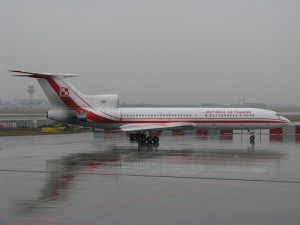
Polish TU 154 Plane Involved in Crash with President on Board

The Tu-154 plane crash-landed and burst into flames near the Smolensk airport, about 400km west of Moscow.

The aircraft had a capacity of up to 90 people, although Russian news agencies reported 132 passengers on board.

The Polish officials, all presumed dead, were in Russia to mark the 70th anniversary of the Katyn massacre, when the Soviets killed thousands of Poles.