I did not want to mention anything about this during the US presidential campaign because the opinion of most of my contacts was against what I was thinking. Trump. He reminds me of Reagan, but I could be so wrong. This one also has to deliver. And this is only possible through unity both inside his country and in the way he conducts foreign policy. The World is changing and common dichotomous concepts like “living in a dictatorship vs living in a democracy” will be replaced by by complex pan-global movements like “acting as a planet while acting as a nation / a religion / a tribe / a group of interests and expanding in a way that is positive for all”. If Trump fails, he could become a new type of Hitler or Stalin or Pol Pot – yet with a difference: he could be the one who has the real power to destroy everything. If he succeeds, we’ll all be better off on Earth and we could send next generations out there, in the future, taking mankind to a new stage, colonising worlds. Can Trump deliver? No, he can’t. But, especially with full control of the Congress, he could be instrumental in setting-up a platform top start with. The future will look after the rest. So, I welcome Trump not for what he is, but for what he could be the trigger of.
Posts Tagged ‘USA’
1st Time I Write about Trump
Wednesday, November 9th, 2016Egypt – Game Over or New World Order?
Saturday, February 12th, 2011As expected by many (and predicted by Mockoblog two weeks ago), Hosni Mubarak abdicated. Protesters are celebrating what they consider to be a victory over a regime which for too many of them coincides to all they can remember – a lifetime.

Scenes of jubilation in Cairo, Alexandria and other major Egyptian cities and throughout the Arab World have the unrestrained joy and the party-like atmosphere resembling a football victory. But who exactly won exactly what? The protesters definitely believe they won the battle against Mubarak, yet they have no idea what’s going to happen next or, indeed, if they won or the regime chose to dispose of the 82 year old president like a trapped lizard which breaks its own tail in order to survive.
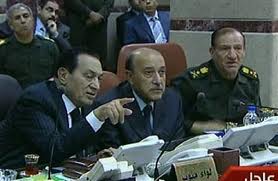
The situation in Egypt is still very volatile and nothing really has improved in terms of filling in the political gap. There seems to be no clear direction, no solid leadership in the street opposition, no positive unity (after the negative message of ‘down with the regime’), no credible alternative to the military power.
The matrix of the Egyptian society after decades of iron fist government is polarized. Most Western commentators fear the dichotomy between Islam and Coptic Christianity, yet the main divide will be between the poor masses and the collaborators of the Mubarak regime. And this is a very intricate social pattern, scaled down to the very single family. There is no corruption without corrupt people and no torture without victims. It is likely that the class that used to have the power will struggle to hold onto it while the pro-democratic protesters will have to protest again. As long as the military holds the power, there will be some balance in the status quo but this is unlikely to last. As the opposition will get better organized, so will the Mubarak’s ‘old boys’ – it will be just much easier for them, as they still hold the connections, the resources and the knowledge.
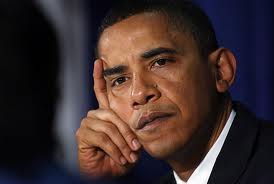
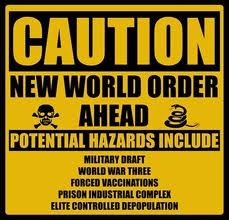
After a series of slight mistakes and embarrassing miscalculations, the White House finally got it right when Mr. Obama said that this was ‘not the end of Egypt’s transition’ but ‘the beginning.’ The beginning of what? This is neither a walk in the park for Egypt’s impoverished majority, nor the cup of tea for other authoritarian Arab regimes, nor much good news for Israel and its allies. A single spark could ignite the Middle East and the situation in Egypt, be it just economic, not even social, political and religious, is a bonfire. Civil War is still in the cards and it may even be of a kind yet unknown to humanity, a pan-national Arab civil war which, if not managed in the region, could easily turn into World War III, perhaps the precursor of the New World Order.
Egypt Crisis – Street Violence and International Confusion – Where to?
Thursday, February 3rd, 2011Ten days into the protest movements, there are more questions than answers around the Tahrir Square in Cairo and indeed in the whole Arab World.
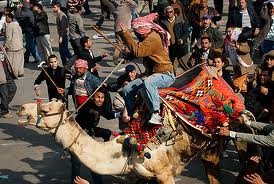
The Egyptian popular uprising has the characteristics of a revolution, and a bloody one, too. Sides are starting to appear clearer out of the smoke of petrol bombs and a power vacuum is opening between the main three parts involved in this street conflict. But who exactly are these three parts and what are they doing right now?
- The anti-government protesters, conquerors of the Square, are turning from peaceful demonstrators to a more violent and better organized civil army – one can only assume they are representing most layers of the Egyptian society and that they would be mainly Muslims.
- The pro-government street movement, the anti-demonstrators, the ones who apparently created the first disturbances by blocking the entrance to the Square in an attempt to cut-off supplies to the protesters – they are thought to include policemen in plain clothes and to be acting on orders from the Mubarak regime, but it is more likely that they would be lower echelons of the power who ruled Egypt for sixty years, people who have a lot to lose once the 82 year old President steps down (or is ousted). The only proof that there was any government interference in organizing the anti-demonstration is Vodafone’s statement that its network was used to send certain messages (allowed by the mobile phone operator due to some legal implications).
- The Army – a bumper between the two belligerent parties, yet an overwhelmed, inefficient and undecided one, as the orders come vertically from the official structure of command while the soldiers in the street are, at an individual level, close to the mob around them. The Army holds the key for the future of Egypt as long as it exists as a monolithic entity, a force to be reckoned with and a potential partner for the foreign powers to negotiate with. As soon as the Army starts taking sides, the revolution can easily become civil war.

The situation is so complex and volatile, that international reactions have been shaky, to say the least. In the last couple of days, American and European leaders seem to have understood that Hosni Mubarak is a dead politician, like it or not. Some other Arab leaders in countries surrounding Egypt can see the end of their regimes approaching quickly. If the revolution is not contained in Egypt (and it seems it will not be), the movement will spread abroad. This is not a Revolution similar to what Europe had in 1848, leading to the modernization of the continent by expressing the national entities and creating national states. The Arab World is divided by purely administrative borders. In fact, one people/one meta-nation live in the area and will act like one. This is something that may elude the understanding of the Western politicians. The road from tribal to modern state has been detoured via artificial countries resulted at the end of the European colonization of Northern Africa and the Arabian Peninsula.
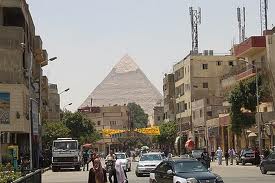
So, what’s next?
Forget Mubarak, who pledges not to leave the country. He is history. Good or bad, he’s played his part. The longer the unrest lasts, the harder the local economy will be hit and the deeper the conflict in the Egyptian society will grow.
Poverty and instability lead to more violence and violence spreads across borders with basic revolutionary ideology.
If countries like Yemen, Jordan and maybe Saudi Arabia get involved in this uprising, the Muslim will, by means of coup d’état and/or the number game of the democratic elections, become potentially hard-line Islamic states and the regional power of Iran will grow.
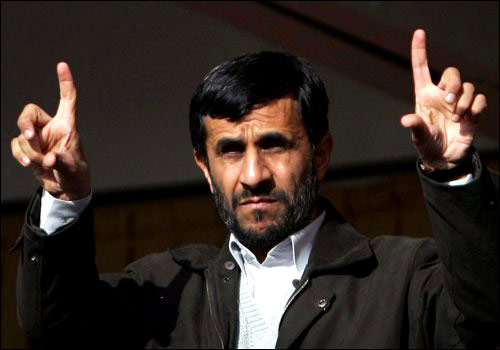
The first to worry will be Israel and the US, and then the whole international community will suffer due to the effect of the crisis on the oil market. Countries like Russia, Venezuela, Norway and Nigeria may benefit straight away.
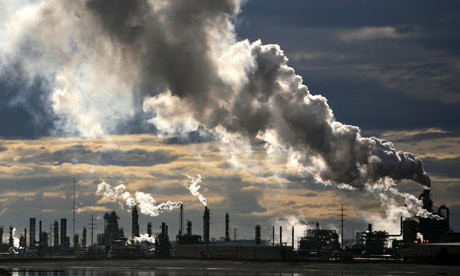
It is likely that other large Muslim countries, mainly Indonesia and Pakistan, will try to take advantage of the opening of this Pandora’s Box. The US will have to act in a military manner and Europe, very dependent energetically, will have to follow.
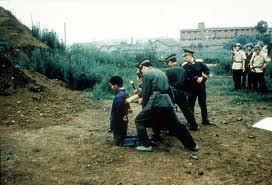
Communist China is the dormant giant to be watched for. They dealt with Tienanmen Square so swiftly, after all.
Could World War III be Triggered by the Egypt Situation? – The Fate of Islam and the Paradox of Democracy
Monday, January 31st, 2011Seven days after the Egypt uprising started, Hosni Mubarak is buying time.
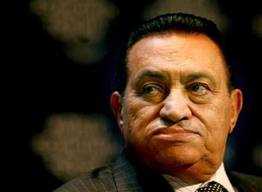
He knows his reign is over but he also knows his predecessor, Anwar El Sadat, perhaps more popular and respected, ended up with a bullet in his chest, meters away from where Mubarak himself was standing.
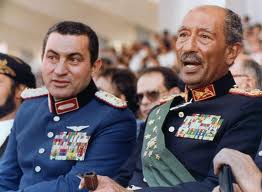
The 82 year old president needs to accomplish three objectives before he leaves the country – yes, this is the only option left for him at this stage:
1. he has to destroy as much as possible of the information that links him and his close allies to any corruption or more severe crimes;
2. he must secure the moneys an other valuables (30 years old dictatorships, even rather benign ones, tend to gather a bit of cash) will be easy to access if and when and where he is overseas and prosecuted (Swiss banks are no more safe heavens from this point of view);
3. he is perhaps negotiating to find a country to harbour him and his dearest long term – the main candidate would be the USA, to which he’s been a good team player, however, the USA will have to make do with the following regime and has no interest to upset a new Egyptian government (this is what happened when the last Shah of Iran, the exiled and dying Mohammad Reza Pahlavi, hoped to find refuge in the USA).
Yet the fate of Mr Mubarak is less important. The future of Islam and indeed the fate of the whole World could be at stake.
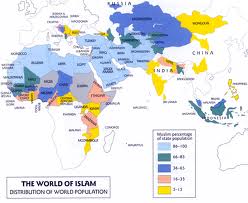
If democratic elections are held in Egypt, the Muslims will undoubtedly win a vast majority. Even with a moderate government, assuming that Mohamed Elbaradei becomes the president, it is unlikely that Egypt’s policy towards Israel and even the USA will maintain status qvo. This is a gunpowder barrel to watch.
The paradox of democracy is that it never worked in a volatile environment. And what more flammable situation than what we experience now in the Middle East? Extrapolating, between Islam and Judeo-Christianity, even beyond, on a planet where the only superpower is loosing ground on every direction, excepting the military one, what is happening in Egypt could be seen as a new Sarajevo, the starting point of World War III, the pretext for a reshuffle of the international draw cards.
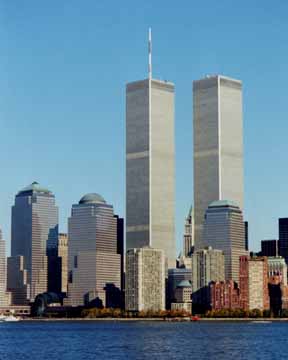
Actually, a Sarajevo-type event took place in New York ten years ago, with the attack on the Twin Towers but it is only know that the ball is in the moderate Arabs’ court, which indicates the maximum level of insecurity for this type of play. This is not George W. Bush versus the Taliban. This is no joke. It’s the big cutting of the cake and anyone wants a good slice of it.
For the next year or two, watch countries like Iran, Dubai and its associated emirates, Saudi Arabia, Indonesia, Libya, Turkey, Pakistan (the only Muslim nuclear country), Azerbaijan, both Korean states, Venezuela, Cuba, Nigeria, France, Italy, Serbia, Greece and the Vatican.
As strange as it may seem, a major international crisis can achieve a few positive changes:
1. a massive boost for the global economy;
2. a redistribution of the power balance, perhaps with China dominating the East and the Pacific, the USA, Europe and Russia controlling the North and the Atlantic, India acting as a world umpire;
3. oceanic and African resources being shared more evenly;
4. less religious hatred with the humiliation of Islam and minimization of the other major monotheistic trends;
5. exponential scientific progress in information, energy (oil will be made redundant sooner than expected) and genetics, leading to the need of a global governance, with the aim of colonizing the outer space (large corporations to act first, as they are better prepared for a changing world than governments).
It is very unlikely that those changes will occur without high loss of life. Mass-murder weapons could be deployed and entire populations may be eradicated.
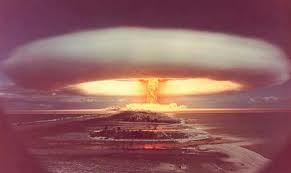
The way Hosni Mubarak will leave Egypt should give us some indication of where everything is heading to. Watch the mockoblog during these interesting and dangerous times and hope you are on the winning side, as there may be no neutral options.