Posts Tagged ‘creation’

How Not to Buy

Saturday, June 27th, 2009

Yesterday I found on the Net a former colleague, maybe even friend. We haven’t been in touch for about fifteen years. I saw her last time in Europe, where we both used to live. Now she’s in North America and I’m in the South Pacific. So many years and so many miles apart, I thought of something that we ­must have in common, something that’s so universally valid, that I can share with my friend and she’ll immediately understand and perhaps agree. I dedicate this mockopost to Vianora.

*

One of the silliest things I can think of is shopping. And I absolutely love it!

I fully accept that shopping is therapy for depression, obesity, measles, catalepsy and many other conditions I claim not to have.  People go shopping even when their account is in red, they get deeper in debt, yet they fell better. If a new pair of slippers could make you fell reborn, a new car will take you straight to Nirvana (I experienced it eight times).

The daily act of shopping is a bit like having sex, maybe with a softer ending, but safer, generally speaking. Sometimes it can involve a little redundancy (daily dairy shopping across the road) but this is like being in a strong matrimonial relationship: loads of fidelity and no surprises. Yet some other times shopping is a heavenly experience: go to Paris or Melbourne, Milan or Tokyo, get a cab and ask the driver to stop as soon as you see a shop with the letter ‘N’ third on its name or just walk on a busy commercial street and pick the seventh shop on the left. Go in and I bet you’ll find something to buy. Now, this is like having a one night stand and waking up with no hangover and the love of your life bringing you breakfast in bed. The only significant difference is that with shopping you can experience this far more often than in real life.

Shopping is power: I can buy; therefore I must have money, which means I’ve got the power.

Shopping is kindness: I can buy something for you; therefore I show you how much I care and how important you really are for me. (And shopping for YOU means even more power: I’m so powerful that I can even afford to  buy it for you, not for ME.)

In a way or another, for many years I sold stuff or I advertised for other people’s stuff so they could sell it better. I know the look in the eyes of a person who wants to buy as well as the expression on the face of somebody who can not afford buying. Shopping is a drug. It is more addictive than nicotine, it is compulsive and unforgiving. Its high is very short lived when compared to how much you spent for achieving it and, what’s worse, shopping is not only legal, but encouraged. In fact shopping is the vital force of our society and one of the few differences between our species and the others.

Having had a lot to do with shopping and selling, I thought I may write a book on how NOT to buy stuff. I’d put really cool little secrets in there, like how not to make eye contact with the salesman and how not to… Forget it! I’m hoping a smart publisher will read this blog and offer me a contract for the printed, podcasted, DVD recorded and the online versions of How Not to Buy. Sorry, this is why I won’t disclose any tricks in here. (Not just yet.) I hope you’ve enjoyed the introduction though.

How I Won Lotto (II) – The Insurance and the Lotto Gamble

Saturday, June 20th, 2009

Today I’ll explain the miracle of lotto: how to win.

Before we go any further, please consider your insurance policies.  Do you have a car insured? Your house, organs, teeth or maybe home contents, the grand piano, even a bank loan or your own life are insured. Good on you! I guess you have enough $$$ to pay for these insurance policies and you have heaps of peace of mind. Let’s say you’re insured against crushing your car and the amount they are going to pay you if you do something very naughty, like slamming your Porsche  into the Pentagon (it has been done, but not with cars) is going to be up to maybe two million dollars (that’s $2,000,000). OK, you did this very-very-very bad thing and the insurance has to pay for it. How many other people did bang their cars into one of the five sides of that well guarded building since you got insured? This kind of event is very unlikely, but the insurance company takes a bet. It gambles the money it makes from you and from many others against the odds. Surely a million people insured for a thousand buck each can pay for one bad driver causing a lot of damage, even a million bucks worth of damage, as during that time the money was invested and created profit anyway. This is a scenario involving big numbers and unlikely events. Let’s analyse the more probable combinations. Let’s say you pay $10 every month to insure your car. Let’s say every ten month you crush it and it costs $1000 to get it fixed. This means that your insurer believes that there are more then ten drivers like you (same age group, same type of car, same driving history, etc.) who will pay the same to have their cars insured but will not crush them. It’s a very simplistic explanation. In fact it’s not only that the company who insured you had done its homework on risk factors, and it’s just collecting money from the ones who keep out of trouble to pay for the likes of you. No! They also make sure you pay in the end. They may have an excess factor, like: “howdy, if you mildly crush your car we’ll pay you up to its full value, but you have to pay the first $500” and “sorry mate, you were paying only 10 bucks a month because you had no claim history, now you have to pay $25 for the next five years. Non-claim years, by the way…” Do you fell ripped of? Of course not! What if it were you? If you have a problem, the nice guys from the insurance will pay for you. It’s just another tax: the tax on your peace of mind.

Lottery is worse. A guy I’ve never met called it tax on stupidity.

I guess he was right to some extent. Yet I believe that both the insurance and the lottery are actually a taxes on the mortality of the human being.  Robots don’t take life insurance of their own and they don’t gamble. They have nothing to loose, thus no fear. That’s because live has no value for them (fair enough, since they don’t have one).  For us how we live our only life is bloody important. If I get sick and I have no money I may die two decades sooner (insurance). If I crush my bike into the Hubble Telescope I may have to pay for the rest of my life, thus my life would be forfeited (insurance).  If I’m broke but I can buy an $5 lotto ticket and I don’t win, I’ll be the same, my life perspectives won’t change (lottery). But if I buy a ticket and I win the first prize of many millions, yes! I’m the man! My life is finally worth living, it’s almost as if I die a little bit less than you guys do (lottery).

Gambling is in our veins, more precisely in the cells that flow through our veins and more precisely in their nuclei but particularly in the chromosomes, to be exact in the genes that programme us to die.

We’ve been gambling since we came out of the egg in the wild, we took our chances by stepping out of the murky waters onto the sand, and then we dared climb down the tree and never returned. That’s if you think Darwin was right. I happen to have in my study his big blue book bound in leather. Bigger than the Bible and I dare say equally boring. As to the truth value of these books, I cannot judge. The truth hurts, yet telling the truth kills.

I’ll tell you some truth today. It’s the truth I believe in as deep as I believe in my alien grand-grand-grandma.

Let’s play lotto: you against the National system that runs the game. Remember the insurance equation many of us are part of? Think of this less consequential one: what if I buy a $10 ticket? The next draw could be up to ten million! Do this every week of your active life…

In a system that draws 6 numbers out of 40, which is generally speaking an user-friendly lottery, more likely to run for a limited time and/or in a small country, every line you pick has 6 numbers and you need a few of them to win. This is how it works:

  1. The first ball is drawn: you have 1 chance in 40 for each number you play, that is 6/40;
  2. If the first ball was lucky for you, for the next one you have 5/39 chances;
  3. (and so on)
  4. (and on)
  5. (and on)
  6. By now, when the sixth ball is drawn, you have 1/35 chances to get it right. That’s on top of being so good as to get all the other ones.

Simple maths tells us that to get 6 out of 40 numbers you have a chance of 1 in 3,838,380. What does it mean? Say each line of lotto is costing you $1 and you buy an average of 10 for every weekly draw, your chances improve by 10, so you really have chances of 1 in 383,383 to win the big prize of the first division. But maybe you are already rich and you can afford to spend $100 weekly: this improves your chances another 10 times, so you will get the top prize with a rough probability of 1 in “only” 38,383. If you pay $100 weekly for every one of the 52 weeks of the year, you only need only 738 years and 1 month to get it! If this news is not good enough, try to just pay more for your tickets: if you gamble $1000 every week it improves your chances but not it may not be enough, as you still have to wait (space of probability, no guarantee, you may win tomorrow or not at all) for about 74 years, which is really not my cup of tea. Of course, you may gamble even more every week, but who would? If you are a millionaire already, I doubt you would be spending your millions on an investment that only has a rough chance of 1:40,000 to generate big profit.

20040229_dur_r34_047.jpg

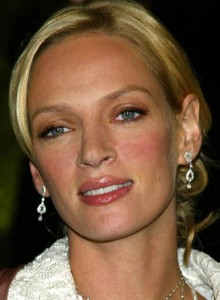
So why do we play lotto? (Please note: I did not ask rhetorically “why do we gamble?” because general gambling is as different to the National Lottery as Uma Thurman is to Danny DeVito. (No offence to either, just two different typos. By the way: I stole these photos off the Internet with no copyright so I may be fined like the Jammie Thomas-Rasset woman who pirated 24 songs and is now to pay $2M.)

danny-devito

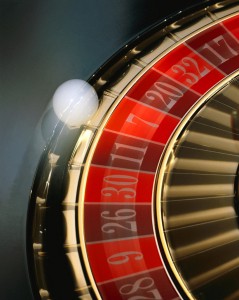
If you want to be in for the big lucky one, go lotto! If you want to stand a chance, go to an honest casino. On Black Jack your chances are nearly 50-50%. On the French Roulette not so good, but a straight bet may win you about $35 for every buck you gamble. That’s more than 100,000 times more likely than winning the big lottery.

This is no promotional stuff for any gambling institution. All gambling is bloody bad (unless you win). Yet winning in a Casino is far more likely and more people do so than on the big lottery stage. However, a BIG win is more attractive because it’s more likely to be a life-changing experience. Be a nice homeless guy, find a coin by the kerb, enter the lotto shop poor, buy a ticket and tomorrow you’ll be a millionaire giving $$$ to charities to keep other people off the street. That’s perfection. Reality is not.

What most people don’t get is that regardless how big the pot is, your chances are just based on how much you spend (how many options you buy). In fact, on a big jackpot you risk more: even if you win, it is more likely that there will be other winners to share the prize with you.

Still remember the insurance business? Your chances to bang into the Pentagon are even smaller than you winning lotto’s first division. What do you want to do? (You don’t have to do anything, yet life is short, thus you’d better spice it up!) I would chose French Roulette (not to be confussed with Russian one).

Roulette110807

Meanwhile I’m signing off to go and check my lotto ticket. By the way: guess if I have insured my car?! (Hint: I drive a British red turbo.)

History In the Mocking (II)

Thursday, June 11th, 2009

Mockoblog Mockolog # 6

Finally I can congratulate Google for realizing their silly mistake. Now you can find this world’s 1st mockoblog using their search engine. In exchange, I am advertising for their site right here. Please leave my blog right now and go to:

www.google.com

Are you still here? If you are, I must say that when you search for the “mockoblog” on Google, they try to direct you to “monoblog” (the same error is being still made by Search.com) while AltaVista.com goes straight to the target. Lycos.com doesn’t do such a good job, sends you to twitter.com first but Ask.com finds us straight away.

Why don’t they all unify their services and search methods? Perhaps if there were only one search engine we could also be charged for using it. Say, I want to find the nearest doctor or bank or I want to learn about making potatoes and leek soup: why should I get this information for free? And the charge could be proportional with the object of your search. If I only want to look for a small fish called Wanda maybe I could get away with only two cents, but if I look for something really big, like Siberia or Bill Gates, than I should expect to be charged zillions. And if I don’t pay, then I go to jail. Of course, Wikipedia.org should be quite expensive and they should police the usage of their info. Having free access to data should be a crime against the future and against the computer race. Is it fair for you to find football results for free on the Internet when a club like Real Madrid has to pay hundreds of millions of dollars for a player like Caca? Are you not ashamed of using Google Earth for free when NASA spends billions to send satellites into orbit?

To make you better understand where I’m coming from, here’s how history works (a bit different to what Stephen Hawking, the Bible and Tom Criuse think –  with all due respect, the first one couldn’t prove it anyway and the other two haven’t even tried):

1. There was a lot of stuff floating around and doing nothing. There was no time at all.

2. This stuff called itself God and found that being God is cool. Actually, giving stuff names is cool and the Word was the first thing that ever made sense. For more details, read guys like Umberto Eco (not the novels) and Noam Chomsky (if you promise to stay away from his political views).

3. Then lumps of stuff turned into rocks, boulders, planets, leaving a great deal of empty space in between.

4. Where there is stuff, things are warmer. Where there’s no stuff at all, it’s bloody freezing. The bigger the things, the hotter they are. This is why a snowball is rather cold and you should wear gloves when playing with it, unless you just want to throw it straight away, while the Sun is pretty warm.

5. To move from one thing to another would be boring and even pointless if you could do it straight away, so God extends all pieces of stuff away from each other, thus making room for time, which is what it takes to get from A to B, save the ticket one should have anyway. (Note that there is a tendency for stuff to look red and blurry in the distance – that’s because our eyes and even our radio telescopes are not perfect. The fact that the Universe is expanding and radiates a lot of red stuff was also replicated by car manufacturers, who chose to make the tail lights red, so we know when the car is going away from us, which is crucial for deciding which way the danger of being run over is smaller when we exit the pub at night.)

6. To make things even more complicated, God allows for more dimensions to co-exist, but does not reveal them to us, unless we are mathematicians, poets or fools (which is a bit of both).

6.1. Sadly, one of the few possible combinations of space and time dimensions is 21. Any bloke who has tried his hand at Balck Jack knows that it is infinitely more likely to find a number under or bigger than 21. Only the Bank (the equivalent of God in modern society) gets 21 on regular basis, which is leading the small Western World to a large Global Crisis.

7. In some corners of this whole stuff God spends more time than in others. This explains why places like the Earth are more complex than places like the back of my hand, but does not explain why between 1 and 2 I can invent an infinite of numbers (try 1.0000001 and 1.0000001000001) and why I will never need all of them.

8. Being God, which is like being the whole Universe or being the Nature itself, whatever you want to call it, means that you are endless and timeless, within everything and above everything, including yourself. This is bloody boring, unless you have the most God-like feature one can have: a sense of humour.

9. God make jokes and surely he laughs. Think about Sahara: why would people like to live over there? (And I also heard that some parts of Maine are rather boring, too, but I can’t prove it scientifically). Or think about a morning when you wake up in no mood for going to work but you still have to go. Yet this is jumping the gun a little bit because God has not created the human kind yet.

8.5 Good created the Aliens far far away in space and time while on Earth there were only a few bacteria and this kind of yucky stuff.

8.55 When one bacterium grew bigger, it turned green (no fashion designer and no art critics could prevent this choice of colour) and then grew even bigger, with leaves and roots. It couldn’t go anywhere, though, so God made a monkey or some sort of even more primitive animal to introduce some action.

8.56 Animals ate plants in large number and plants in smaller number ate animals, animals chased each other and also ate a few of their own until the Aliens became mature enough to travel to our planet and found it funny, but not developed enough. They left. This was about when the dinosaurs got extinct due to the smoke of the old spacecraft.

8.9 Aliens came back. This time they were even more developed and their crew was made of an African, an Asian and a Caucasian, all guys, all scientists, all wearing heavy gear, including helmets but otherwise quite young and sporty. They conducted an experiment on three continents and I won’t go into details but after their departure the monkeys on Earth were much smarter and some started building foot-passes like runways and pyramids like beacons. Women especially are still waiting for the Aliens to return, they call them Gods (“My God!” comes precisely from this very point in history and can be found more or less in any language). It’s not known if women or men started art, but it’s likely none of them did, it just happened by mistake and it remained like this ever since.

8.91 Three major races developed and they didn’t quite get on with each other. In some areas, notably the Middle East, mixed populations fought war against each other for various reasons that can be mainly linked to race, which is a tribal thing, but canbe  mainly explained by the absence of the British Empire, inventor of all sports and looser of most.

8.92 The Aliens/Gods returned for a second time but they didn’t land. Instead, from the outer orbit, they sent some clones (giants) to punish the population down there but this folk made friends with the Earthlings, so the Aliens got really grumpy and opened the flood gates of the planet to extinguish most life. They kept just a few genetically superior individuals, if it is to believe most legends. In fact, they actually re-created the humans but introduced a bug in their system, thus humans age and die. The only feature they did not include in humans was the sense of humour. Because Aliens are not Gods at all.

9.1 Now we can talk about homo sapiens although the adjective is not always deserved. Society was developed in three stages: material (stone age), energetic (industrial revolution) and informational (now). The fourth stage is unknown to us because it is beyond our comprehension and involves the transformation of our species into something that we could call perhaps “robots”. It doesn’t sound like much fun.

10. The Aliens are due back with a vengeance. Ask Nostradamus if you don’t believe me, the Aztecs (or the Maya guys?) and your local priest. Yet population should not panic: it’s not the year 2012. It would have been to obvious. You have to read it backwards: 2102! So we are not doomed. Actually our grandchildren, the robots, are!

This is why we should consider banning the free exchange of information and restrict people’s access to each other, so when the Aliens arrive, we can all be dumb, living in dark isolation, completely non-interesting, a failed experiment. Only this can warrant us non-interference from the visitors. And, as Nature in general and politics in particular have always proven, our species could only evolve through the survival of the dumbest.

I’m happy to volunteer and be the first to pay Google a few bucks for letting me search on their system and finding my own website.